

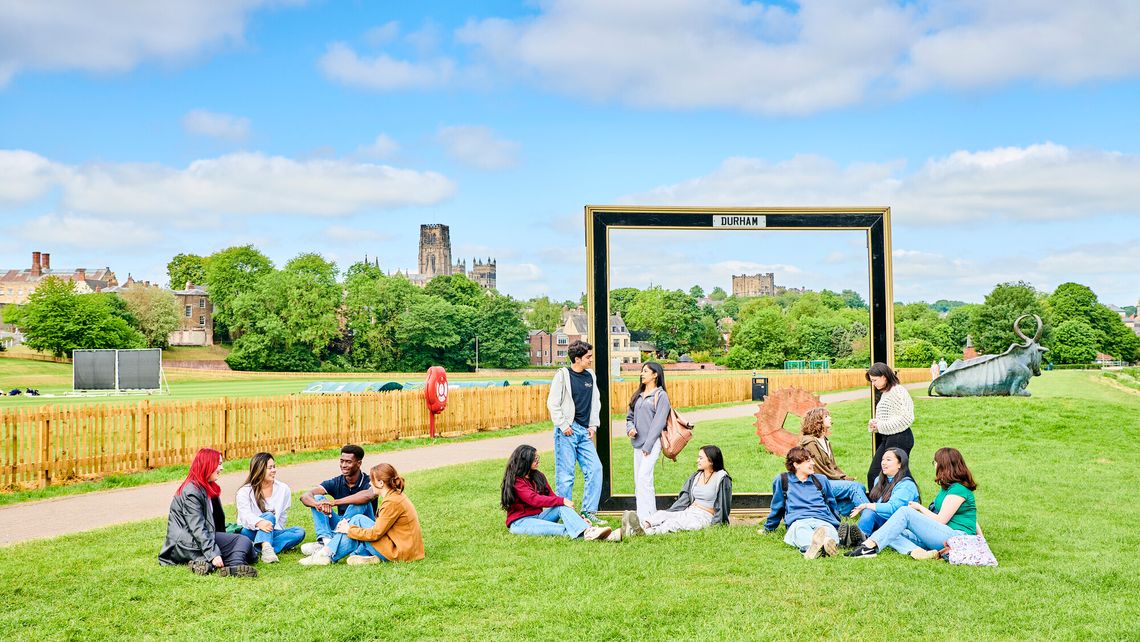

Cobbled streets and a collegiate structure combine to create Durham’s distinctive student experience, and demand for a place keeps rising: the university attracted almost 38,000 applications for 2025 entry (up 7.5 per cent since the year before) for 6,845 places — a 23 per cent increase in new undergraduate enrolments year on year. It is awarded University of the Year in the North and Northeast 2027.
Getting a place is fiercely competitive: applicants need to be well armed with A*s and As to meet Durham’s high academic requirements. Once enrolled, the university takes pride in fostering a supportive atmosphere for them, as embodied by its “freps” (freshers representatives) who help new students settle in. Its relatively compact size (there are 22,000 students) contributes to a sense of community. Societies, university-wide balls and sport — from Pilates to rugby — are the backbone of social life. Durham students tend to hit it off: almost three quarters (72 per cent) will marry a fellow Durham alumnus, with a third of couples starting their relationship after graduation, compared with a national average of 20 per cent.

What is Durham University’s academic reputation?
Down three places to rank sixth overall, Durham remains a research-intensive powerhouse. In the QS World University Rankings 2027, a nine-place rise brings it further into the top 100 (85th), and it reaches 175th in the Times Higher Education global rankings for 2026. In our UK research quality index, based on REF 2021 results, Durham ranks 23rd. Some of its best outcomes were in education, geography, archaeology and forensic science, with classics and ancient history, theology and sports science also performing strongly.
Teaching is all in person rather than online and, unlike at Oxford and Cambridge, it takes place in central academic facilities. The latest Teaching Excellence Framework (TEF 2023) rated Durham gold for student outcomes. For the second year in a row, feedback from students in the latest National Student Survey shows significant improvement. Satisfaction with teaching quality has risen nine places (15=) and undergraduates rate their wider experience well too, rising 12 places to rank 34th.
Durham is not immune to the financial struggles facing the sector. It is in the process of saving £20 million over two years to ensure a “sustainable financial base” after an £8 million deficit. A voluntary severance scheme in 2025 reduced total staff numbers by about 5 per cent.
What are Durham University’s entry requirements — and my chances of getting in?
Durham’s entry requirements are A*A*A to ABB. Offer-making rates are published by the university, highlighting subject-level variance. A quarter of home students admitted in 2025 were eligible for Durham’s contextual offers, which reduce standard entry requirements by two grades.
What are the graduate prospects and how will the university help me get career-ready?
Future prospects continue to stack up well for Durham graduates. Ranking eighth in our analysis of the latest Graduate Outcomes survey, the university’s results show that 82.8 per cent of leavers are in highly skilled jobs or postgraduate study within 15 months. Last year Durham was our Runner-up University of the Year for Graduate Employment, holding fifth place for graduate prospects. The university is also in the top ten UK universities targeted by the largest number of top graduate employers, according to High Fliers 2025. Recruitment activities, careers fairs and employability workshops are aligned with students’ career aspirations and an online equality, diversity and inclusion hub provides tailored guidance. A new programme, AI and your Career, aims to support students to use artificial intelligence effectively and ethically within job applications.
What is Durham University’s campus like?
Durham may not be a campus university, but the city’s small size creates a campus-like atmosphere across buildings ranging from the historic to the contemporary. University College (also known as Castle), was the first to be established in 1832. High construction costs led the university to halt the redevelopment of the historic College of St Hild and St Bede, with its students at present based at Rushford Court.
A £75 million investment added the Mathematics and Computer Science Building in 2021, alongside expanded laboratories for psychology. Laboratories across campus have been upgraded, complemented by £1 million in audiovisual technology university-wide. The university also features a dedicated entrepreneurship hub, the Hazan Venture Lab.
When can I visit?
Everything you need to know about Durham University’s student life and wellbeing support
Ready, steady, go! Sport remains central to student life at Durham, twice crowned our Sports University of the Year. Some £35 million has been invested in its Sports and Wellbeing Park, which features 15 boathouses, a five-lane cricket centre, six grass rugby pitches and five indoor courts. Intercollege rivalries drive high participation, supported by gyms in every college. Music is another forte, with more than 30 musical societies available.
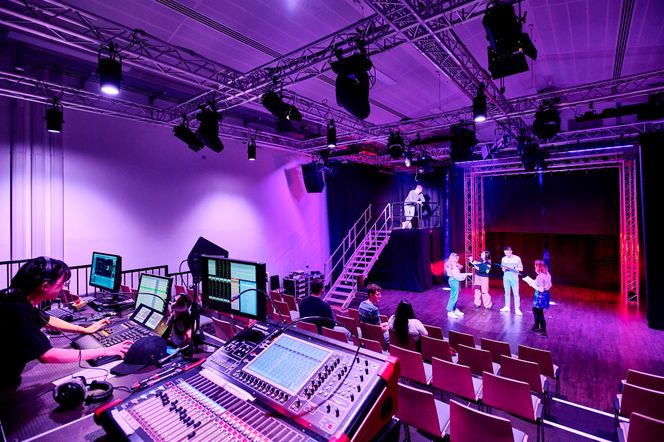
Durham’s varied societies include more than 30 theatre companies and a different show is staged every week. Student media includes the Palatinate newspaper and 24/7 term-time broadcasts on Purple Radio.
Students can self-refer for mental health and wellbeing support, while staff refer complex or high-risk cases to specialists and NHS professionals. Though bijou, Durham provides vibrant student nightlife, complemented by Newcastle’s larger venue scene.
What do the students say?
“Durham provides a home for students to belong, grow and thrive. Through our vibrant student groups and collegiate system, students are supported… developing as leaders, accessing events that teach beyond their degree, and building a network for life.”
Callum Hendry, students’ union president
What about student accommodation at Durham University?
First-years are guaranteed a place in one of the 16 undergraduate colleges, mostly near campus, and most take up the offer — 87 per cent in 2025. Facilities vary, from Trevelyan’s sports court, gym, and upgraded bedrooms to St John’s modern three-storey library and 12th-century chapel, St Mary the Less. University College students reside in historic Castle, which added a new outdoor performance space in Fellows Garden. A joint code of practice with local letting agents helps regulate the chaotic and expensive private rental market, where off-campus costs range from £120 to £180 a week.
How diverse and inclusive is Durham University?
Durham’s low proportion of students from nonselective state schools — 49.9 per cent — makes it one of only four universities with more than half its intake from selective schools. However, Durham invests £14 million annually in access initiatives. Outreach includes Next Gen Durham (Years 7-11), Destination Durham (Years 12-13) and the national Asian Access Pilot targeting sixth-formers from underrepresented Asian backgrounds. The university is also expanding support for care-experienced students, closing attainment gaps for disabled and mature students, and partnering with a local sixth-form centre to establish the Durham Mathematics School.
What financial assistance is available?
A third of students received financial support in 2025-26 through bursaries, scholarships, prizes and hardship funds. The Durham Undergraduate Bursary Scheme provides up to £2,721 annually for students with household incomes under £30,000, scaling to £714 for incomes up to £62,377. Discipline-specific scholarships are also awarded. There is also a £1,000 Independent Student Bursary and 20 per cent accommodation discount for under-25s assessed as independent by Student Finance England.


